Wednesday, June 5, 2013

Heritage Turkeys

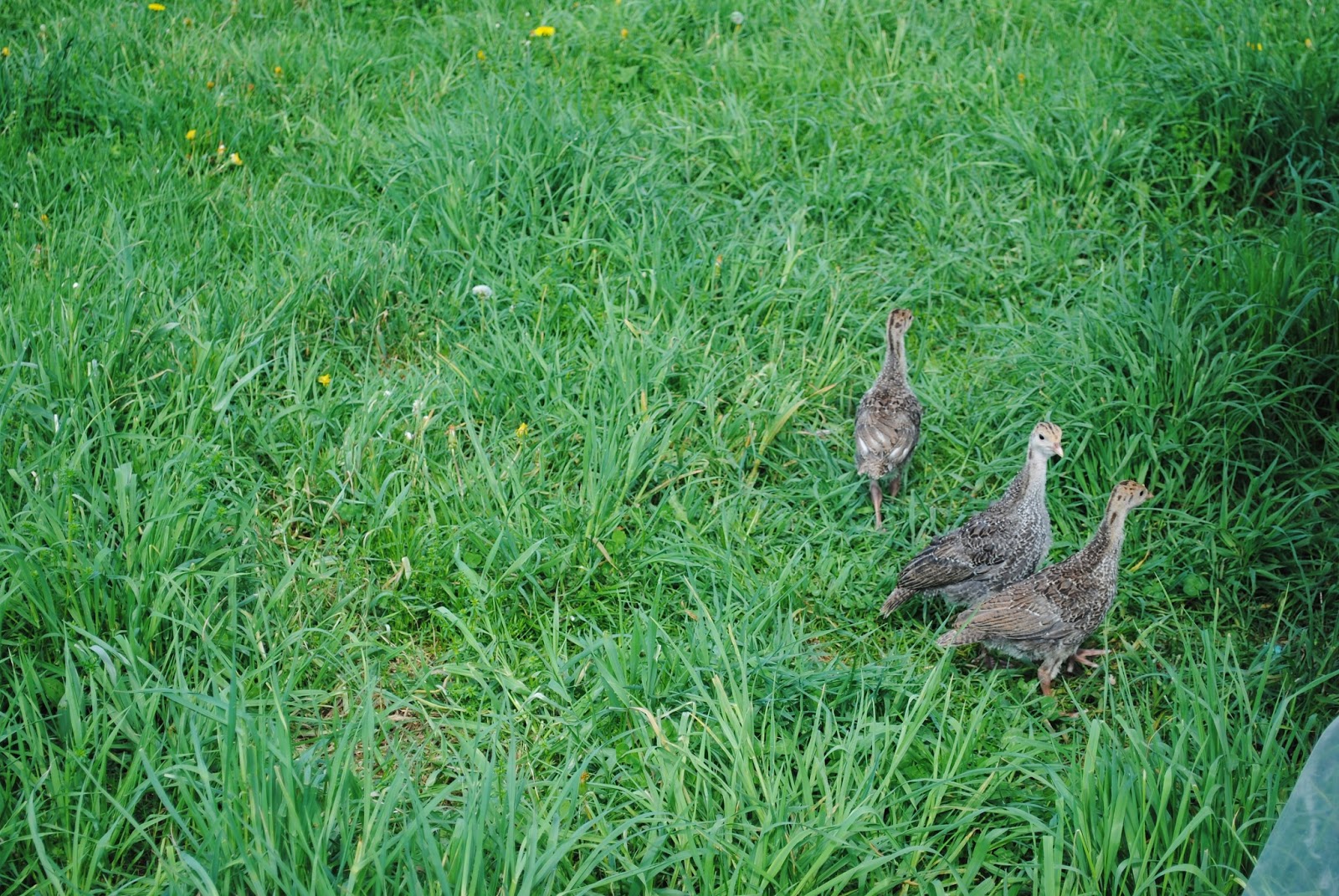
The turkeys arrived on the 25th of April with a note from the hatchery telling us that they would be 'lively, husky and' some other adjective that has since been forgotten because the word husky was so preoccupying. Husky? At any rate, three of the 21 perished within a day or so of getting here, which is on par with other poultry we've raised. 

It seems that the world is full of conflicting reports about turkeys and their ability to survive even the simplest events in life. For instance, after praising their stamina, the hatchery insisted that baby turkeys never be let out in the rain and that they even prevent their mature birds from getting wet throughout their adulthood. What? We'll need to be hustling turkeys in from the pasture when a cloud blows over? Garth read that Joel Salatin doesn't shelter his turkeys from weather events at all, while I hear people locally tell us about turkeys that stand in the rain with their heads up and drown.


Well, so far they have been much more sophisticated than we feared. We began letting them out to range around a week or two ago. There have been a couple fast moving storms that worried me, but the birds have put themselves inside or under burdock leaves and have suffered no harm. Their personalities are fairly ideal. They are curious, friendly, and seem to be free of the constant stress and terror that consume chickens from the inside out. They love being in the grass and they make a wide variety of calls to each other, none of which affront the ears the way a goose or a hen call might. They are lovely. They are almost big enough now that stray cats or clever skunks have ceased to pose a mortal threat. With a little care they should continue to flourish from here on out.


- Alanna

Wednesday, April 10, 2013

First Calf of the Year

Robinia just gave birth to a beautiful heifer calf on the 8th. It was the first day this spring to reach 60 degrees, and the cows were panting and desperate in their winter coats. They'd had reason to keep them until now.


Robinia is the first cow born on our farm to give birth on our farm, which feels like a landmark. So, let the calving season begin! And let the shedding season commence soon too!

- Alanna

Thursday, March 14, 2013

Cows on the Run

Having come in from my afternoon chores, I was about to sit down to write about the very unromantic malaise of March. Farming is occasionally painted as Renoir would - all gaiety in pastel hues - a harmonious overlapping of the farmer and nature - interdependence at its best. My recent observations don't conform to that aesthetic. The egg mobile sits above a thick swamp of soaked feed and poop that the chickens leave their tracks in after pecking after the edible bits. The winter's compost that they didn't consume lies bloated and gray on the saturated ground. The cows mull around in their own wet waste, churning the soil to its own detriment. The grass that does show through the swaths of snow is the color of mulch hay and mice. This was all about to pour out of me in greater detail when Garth swung open to the door to tell me that the little cows had broke through the gate and were on the loose. I tied my boots, grabbed a long stick and hustled outside. 

Garth had been suspicious of their intentions every time he would see them congregate at the lower gate, sniffing and licking the metal chain that keeps them in their place. It's unclear how they actually got out, but three of them were on a mad dash toward the main road. I ran after them, trying to hedge them into our neighbor's field to cries of Garth yelling "don't chase them!" As I hoped, they turned right and galloped off over the sloping hill toward the tree line. I followed them at a great distance, trying to make out exactly where they were. The cows that remained within our fence were getting a kick out of this, bucking and jumping in the air and hollering to them desperately. Within minutes I saw the escapees at the edge of our fence again, as Garth tried to open the gate for them in time. They didn't take the bait and ran up the road instead. Garth followed after them. They meandered across the road to the other field when I saw Garth running down the hill toward the gate ahead of them as they followed behind. On occasion Garth will get them all running by sprinting down the fence line to close in the chickens. Apparently this was good practice for today. But soon the  forward motion sputtered and stopped as they careened around to go up the hill again. Garth ran after them and cut in across the stream to force them to run down along the fence. I stood with the gate open, but moved away from the gate and onto the road as they approached. They stopped dead in their tracks when they saw me and made a few vain attempts to prolong the chase. Finally the youngest of them noticed the open gate and the lack of human intervention beyond it and trotted in with the others behind her. We ran them up to the top of the hill to join the 'big' cows. We had been wanting to merge the two groups for a week now, and I guess we were just waiting for them choose it themselves. It is blowing snow now, but I think they are old enough to handle it without the comforts of the barn. I am just grateful to have them all back in one place because the thought of the sun going down and missing a handful of cows makes me sick. I would take March any day in comparison with that.


- Alanna

Sunday, February 17, 2013

Bits of Color

The passing of these cold days is made easier by moments of color. These are the ones that have swept me up in their coming.


The gorge is at its finest in winter. The collective evidence of entropy is softened beneath the snow. You can hear the water rushing under its arrested surface. The slow rhythm of these short days permits me to visit the edges of our farm, the places where our will is not evident.


Have you been making sweet potato pancakes? If not, I encourage you to try. Grate 1/2 of a peeled sweet potato and mince some onion finely. Mix them together, add an egg with some salt and pepper, and pat the mixture flat into a hot pan that is well greased. Fry each side until it is crisp and lightly browned and then top them with savory things of your choosing. Below is an avocado with melted cheddar, but I have taken equal pleasure in cream cheese, avocado and bacon, and of course cream cheese, dill and smoked salmon. It is nice to have something orange when the world is composing variations on grey. 


And for the grand finale, I was doing yoga one morning weeks ago when I saw a red pigeon flying with the flock of soot colored ones. I ran downstairs to catch Garth before he left for chores, pointed the bird out, and then we marveled at it for some time through binoculars. We felt pretty certain that it was indeed a pigeon, but then we didn't see it again. It was more than a month before Garth saw it a second time. He brought the camera out and managed to snap this photo. If you click the image it should enlarge. Which one of these is not like the others? Does anyone else know of a completely red pigeon? How lucky are we to have something red in the winter sky?


- Alanna

Sunday, January 20, 2013

Predator Pressure

Edmund and Garth both shot deer this season. They hung in our hops barn as long as the weather permitted before being skinned and butchered. I was present while Edmund was pulling the hide away from the carcass, and I heard him gasp. He had found a cluster of dog ticks buried in the white fur just behind the deer's front legs. He related this experience to a group of older men who gather every year to cut their deer communally. They always invite Edmund and Garth to partake in these evenings. Many of them reported finding the same thing on their deer. The alarming part is that they have been hunting deer here for more than 60 years, and no one ever remembers seeing a tick on one of their animals until this year. Last year was a very warm winter and this may be just another indicator of the pervasive shift occurring in our climate. Whatever the cause, it makes me uneasy. 

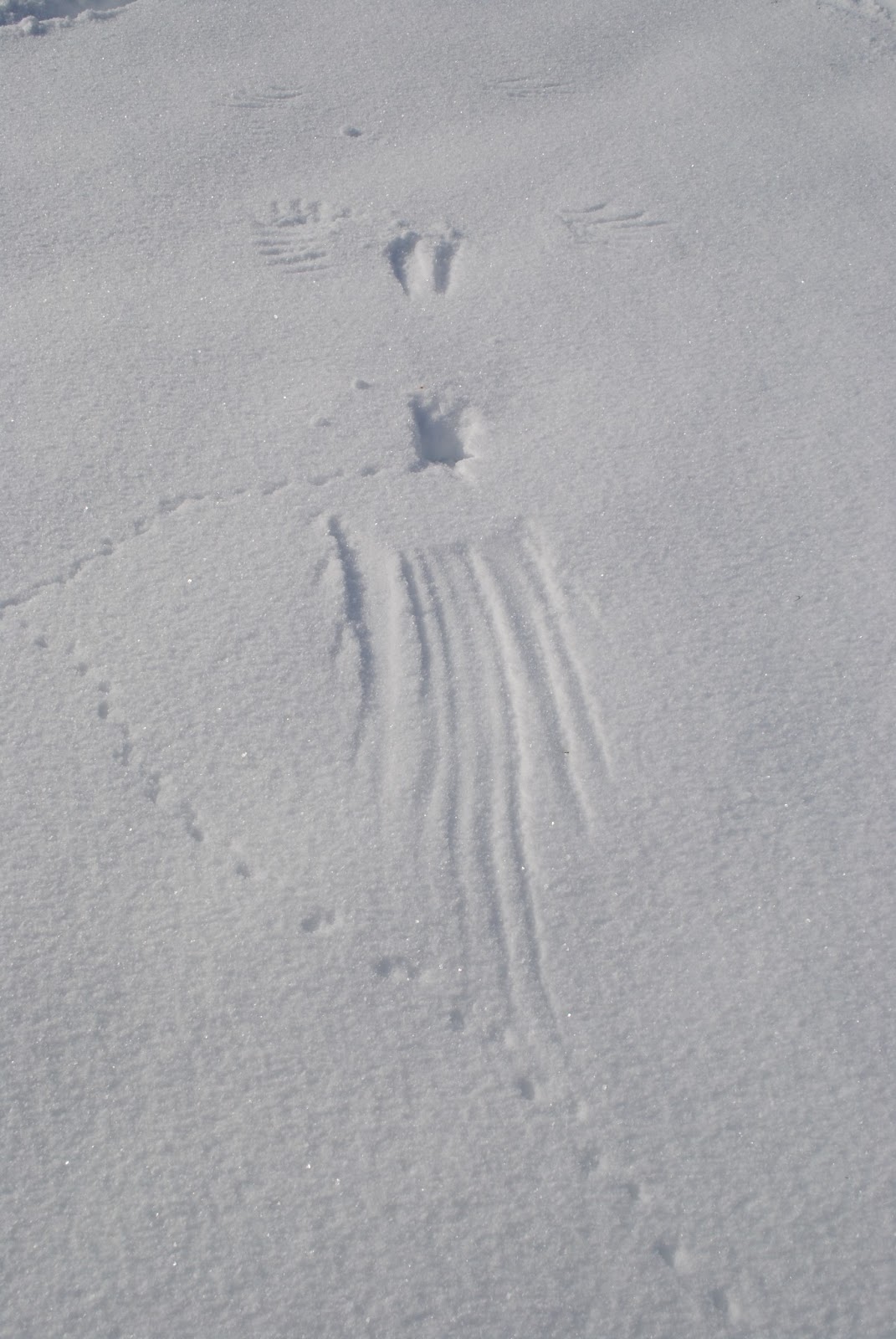
I heard a radio program recently that was discussing zoonotic diseases - those shared between animals and humans - lyme disease being the most recognized among them. The person being interviewed described the factors that limit their spread. The most effective was the natural order attained by having diverse species inhabit a large area together. Predators limit the overpopulation of their prey, allowing a tenuous balance to be achieved  The diversity of wildlife on this farm is our most important asset in maintaining ecological stability. It is one thing to hear owls in the night, or observe coyotes stalking groundhogs, but it's another thing to find clear evidence of a predator with its prey. After taking some hay up to the cows, I was remarking to Garth about how you could see all the little mouse tracks swerving this way and that on top of the snow. Our eyes followed the meandering lines until we both noticed one path that was interrupted.


A large bird had caught sight of this rodent, swooped down, carving large streaks with its tail, and then, clutching the mouse with its talons, broke into flight again. I feel so happy to have these relationships playing out around us. It's my hope that our farming practices will do little to quell this activity and that we might live contentedly around the edges of this dynamic order. 


- Alanna

Thursday, January 3, 2013

Heirloom Turkeys in the New Year

The new year stretches ahead of us. 


This is the path worn through the snow by our cows. They use it to retreat from the wind once they've eaten their fill. It stretches to the very top of the hill where the forest beyond the fence cups the pasture at its side and blocks the brunt of the weather. I marvel at them every time I'm within view when they descend to the feeder. They follow each other tightly in single file along the ridge of the hill. We have nearly two feet of snow now, and cows know to conserve what energy they can through minimizing their efforts. We're doing the same - carving only necessary paths, going no further than we need to, and casting our minds forward as we sit comfortably indoors.

Among our many ambitions for the coming year, raising heritage turkeys is high on the list. We haven't decided firmly on a breed yet, but we intend to raise an heirloom bird on pasture, one that might actually fly away from us if it cared to. Initially, we thought of raising a set number of birds and randomly offering a few of them for sale when the time came to the first bidder. But Normandy had the brilliance to suggest that we inform people of our intentions ahead of time, and then raise as many birds as we have the interest for. Granted, we don't yet have full command of the details (what the poults will cost, the grain expense, and these finer points will certainly contribute to the final price per pound). But a few things are certain: these turkeys will be truly free ranging in our pasture with our cow herd - they will be fed organic grain (although they will also be fed any number of garden scraps and roots we harvest for them - meaning that they will feast on the full compliment that nature/nurture has to offer) - and that we will care for them with the respect that sentient beings deserve (including a humane slaughter by own own hands). If you are interested in purchasing one or more of these birds from us, send an email directly to cairncrestfarm@gmail.com. We will respond shortly with all the details, including discounts for pre-orders, that may influence whether or not you want to commit to this. If a number of people in a given location (say, Bryn Athyn) express interest, we would absolutely make a specific trip to deliver those turkeys fresh. On the off chance that more people express interest than we feel comfortable accommodating, we will determine priority by the order in which we receive e-mails. 

We hope you are enjoying some reflection on the past year and casting your hopes for the one to come like seeds into good ground. 

-Alanna

Monday, November 19, 2012

Cold Weather Grazing

The other morning I was out moving the cows to a fresh break of grass and marveled at their ability and willingness to eat huge quantities of frozen grass.  The morning temperatures here at Cairncrest have been in the upper teens and low twenties, which is chilly enough to freeze the surface of the soil and heavily frost our pastures.  Cattle must have massive bloodflow to their mouths to keep them warm and mobile while munching down pound after pound of ice.  Our cows need just under 30 pounds of dry matter per day in order to fill their rumens and stay happy.  Standing pasture has much more water in it than dry hay does, so when grazing they actually consume more than 30 pounds of forage per day, which is a lot of cold, cold stuff to chew through.

The end of our third year of grazing approaches, the exact date will probably be determined by the weather, i.e. too much snow will fall for the cows to dig through for a fresh bite.  It is possible we'll run out of grass before the snows get too deep as our pasture's fertility is far from optimized and the volume of grass available to our herd diminishes by the day.  Our goal is to make it to the New Year on stockpiled pasture, thereby avoiding many days of (expensive) hay feeding.  Last year we grazed until just after Thanksgiving, but this year our management was tighter and the weather has been cooperative, so things look good for meeting our goal.


Here is a photo of where the cattle were a few days ago.  Note the line in the grass where the cows were fenced and the spot where they have yet to hit.  We're currently moving the herd away from this line, but we'll be back to harvest all that good grass in a week to ten days.  Well, actually the cows will get to do all the work of harvesting... This area was last grazed back in late July/early August.  The regrowth is pretty good because we have outwintered the animals here and all the imported hay has done wonders for the quality of the pasture.  Unfortunately this is only one small section of a much larger pasture, and most of our land in this paddock is not so lusty.


And here is a picture of the herd.  You can see the portable electric fences we use to set-up new paddocks every day or two.  Also worth noting are the water tanks.  We have to remember to drain the hoses every time we fill them this time of year or else we run into issues the next time we go out.  Frozen hoses are a royal pain.

Once it gets even colder we will set the water tank in a "permanent" spot for the winter and leave it running continually, with a drain to siphon the excess off to the little creek at the bottom edge of the paddock.  The agtitated water can then stay open for the cows even when the temperature drops way below freezing for days or weeks on end.


And here is a picture of my favorite cow in our herd, Sable.  She's docile, maintains her condition well, and raises a big calf every year.  I love cows.


-Edmund